Pick Excellent Refurbished on the listing form. You have just promised a one year warranty.
eBay says so in its own wording for that option. Very Good and Good say it too.
Most sellers pick from that dropdown the way you pick a coffee size. Quickly, by feel, without reading.
Yet each option carries wording eBay wrote. The buyer sees it on your listing. A case then gets judged against those words, not yours.
Condition rows are behind a good share of the disputes we untangle. Almost none of them were dishonest.
What each option commits you to, and the two questions that settle most listings.
Key Takeaways
- eBay presets the options, and they change with the category you list in.
- Picking the right one helps you follow the selling practices policy. eBay says so.
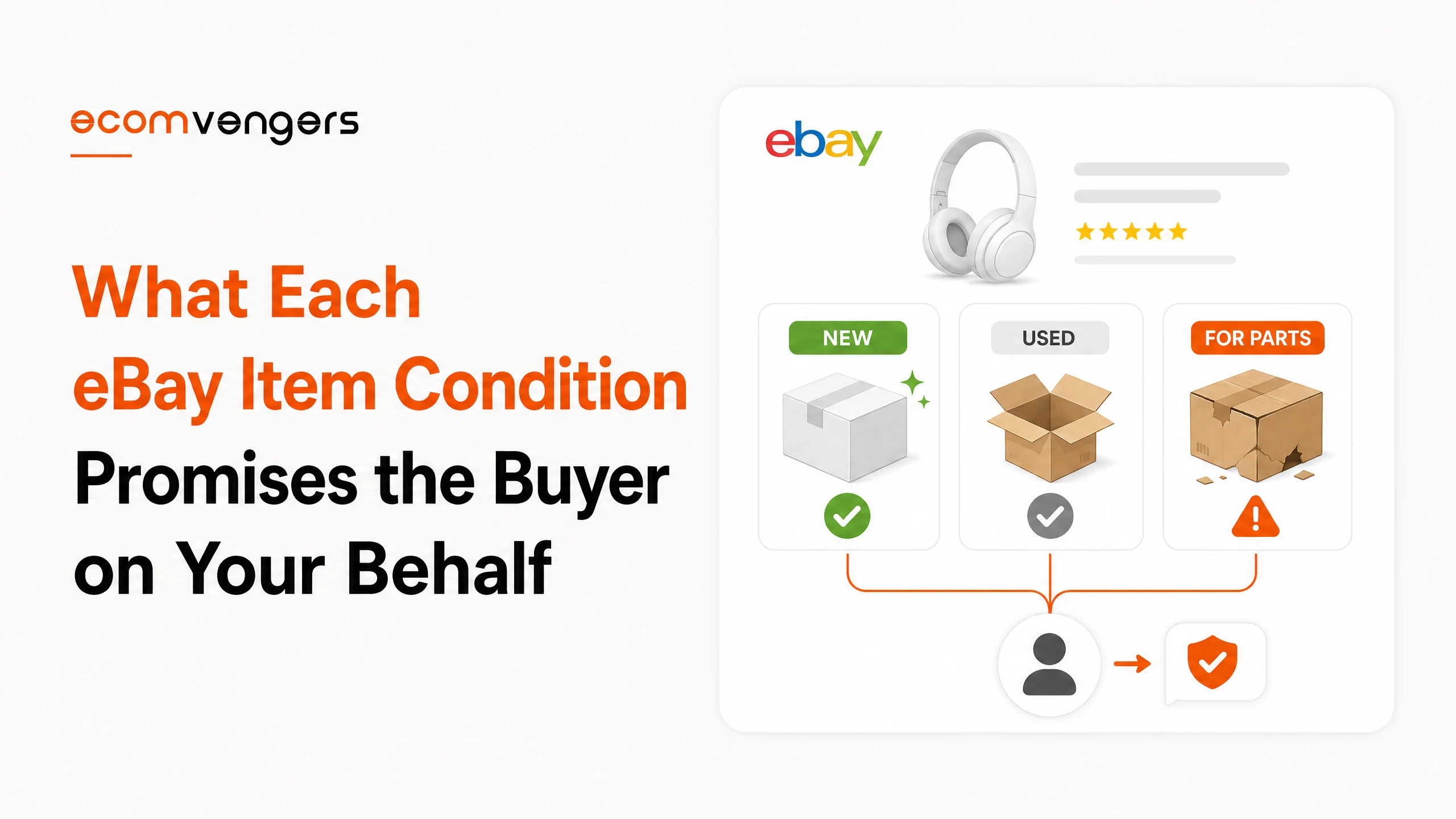
- New means unopened and undamaged, in the original box.
- A new item can still arrive in plain manufacturer packaging.
- New other allows an opened box. It demands no signs of wear at all.
- A factory second with minor defects is New other, not Used.
- Used allows cosmetic wear. The item must still work as intended.
- For parts covers anything faulty, needing repair, or missing key components.
- Certified Refurbished needs the maker or a maker approved vendor.
- Excellent, Very Good and Good Refurbished each state a one year warranty.
- Those three also come in new generic packaging rather than the original.
- Every definition ends by pointing buyers at your listing for the detail.
What an eBay Item Condition Promises on Your Behalf
A sentence you did not write, shown to every buyer.
eBay writes the wording. You pick the label, and the wording travels with it onto your page.
So this is the one field where somebody else chose your words. Better to know that now than during a dispute.
eBay also ties the choice to policy. Picking the right one helps you follow the selling practices policy, which makes a wrong label firmer than careless.
The options change with the category
There is no single list. That catches sellers moving into a new department.
eBay publishes sets for clothing, shoes, electronics, trading cards, tyres, food and drink, and parts. Each group offers its own options.
Move a listing between categories and the choices move too. Check the field after any category change. There is more on that in the second eBay listing category slot.
Where New Ends and New Other Begins
At the seal on the box, not at the state of the item.
New means brand new, unused, unopened and undamaged, in the original packaging. eBay adds one allowance. Stock straight from the maker may arrive in an unprinted box or a plastic bag.
New other is where sellers get careless. It allows a missing box, an opened box, or a seal that is gone.
What it does not allow is wear. eBay uses the phrase absolutely no signs of wear, and absolutely is doing real work in that sentence.
Key point: New other is about the packaging, not the item. An opened box is fine. Any wear at all is not, whatever the box looks like.
Factory seconds live here too
This part surprises people, and it is useful.
eBay says New other may be a factory second, or a new and unused item with minor defects. A flaw from the factory does not push you into Used.
The distinction is wear rather than perfection. An unused item with a moulding mark is New other. The same item after a fortnight in a drawer is not.
eBay also asks for a description of any imperfections in that definition. So the label buys you nothing unless the listing spells the flaw out.
What Used Actually Requires of You
One promise, and it is stronger than sellers assume.
eBay defines Used as previously used, possibly showing cosmetic wear, but fully operational and functioning as intended.
Read the second half again. Cosmetic wear is fine. Anything that stops the item doing its job is not.
So a scratched camera that takes photographs is Used. A pristine camera with a jammed shutter is not, however lovely it looks.
eBay names two common cases here. A floor model counts as Used, and so does an item returned to you after a period of use.
For parts is not an insult
Sellers avoid this label because it feels like admitting failure. It is simply the honest bracket.
eBay uses it for anything that does not function as intended or is not fully operational. That covers defects that make the item hard to use, anything needing service or repair, and anything missing essential components.
Missing essential components is the line people trip over. A console without its power supply is not a working console at a lower price.
Listing it correctly costs you a smaller audience. Listing it wrongly costs you a case, and cases are covered in why two eBay cases closed without seller resolution can end your account.
The Refurbished Grades and the Warranty They Carry
Four grades, and three of them commit you to a year.
Certified Refurbished sits at the top. eBay requires the work to be done by the manufacturer, or by a vendor the manufacturer approves, to meet its specifications.
That rules out almost every independent seller. You cannot certify your own refurbishment, however good it is.
Certified also promises original or new packaging, with original or new accessories.
Excellent, Very Good and Good
These three run on the same template, with the wear level as the only variable.
Excellent means like new. Very Good means minimal wear. Good means moderate wear. All three describe work by qualified sellers, and all three arrive in new generic packaging.
Each one also states that the item is backed by a one year warranty. That is not a suggestion attached to the grade, it is part of what the grade means.
Worth knowing: Excellent, Very Good and Good Refurbished each commit you to a year of cover. Pick one only if you can honour that on the unit in front of you.
Before you pick one, work out whether you can honour a year of cover on that unit. Where you cannot, the grade is the wrong grade.
Seller refurbished is the one most people mean
This is the honest home for work you did yourself.
eBay describes it as an item restored to working order by the eBay seller or a third party. Inspected, cleaned and repaired to full working order, and in excellent condition.
Packaging may or may not be original, which is a genuine relief after the tighter grades above.
No warranty appears in that definition. Offer one if you like, and understand that eBay has not written the promise for you this time.
Why the Wrong eBay Item Condition Costs More Than a Refund
Because of where the complaint lands afterwards.
A buyer who expected no signs of wear and found a scuff opens an item not as described case. That report feeds your service metrics whether you refund cheerfully or not.
Speed does not rescue the number, which is the argument in why resolving a case fast still counts against your eBay service metrics.
Let it escalate and the cost doubles. A case eBay steps into and closes against you also becomes a transaction defect.
So the dropdown you spent two seconds on is upstream of the two metrics that decide your seller level.
Grading down is cheaper than grading up
Where two labels both look arguable, take the lower one.
A buyer who receives something better than the listing promised does not open a case. A buyer who receives something worse always might.
The cost of grading down is a slightly smaller price. The cost of grading up is a case, a defect and a metric you cannot argue with.
Why Buyers Read the Condition Before the Price
Because it tells them what risk they are taking.
Two identical listings at different prices are not a bargain and a rip off. They are usually two different conditions, and the buyer is pricing the gap.
That works in your favour more often than sellers expect. An honest Used label at a fair price beats an optimistic New other label that invites an argument.
Condition is a search filter too
Buyers narrow results by condition constantly, and the field feeds that filter. How complete a listing is counts as one of the seven eBay Best Match factors.
Someone filtering for New will never see your New other listing, however close the item is. Someone filtering for Used will never see it either.
So a wrong label does not simply risk a case. It can put you in front of the wrong audience, or hide you from the right one.
The same mechanism runs through every structured field, which is the argument in why empty eBay item specifics delete you from filtered search.
How to Write the Condition Description Underneath
Every eBay definition ends the same way. See the seller’s listing for full details.
That line hands the detail back to you. The label sets the bracket, and your words fill it in.
Name the flaw, its size and where it is
Light wear is not a description. It is a shrug in writing.
A 2cm scratch on the base, near the left hinge, is a description. Nobody opens a case over a flaw they read about and then found.
Say what is in the box
Missing accessories cause more disputes than cosmetic marks.
List what ships, and list what does not. Cable, charger, manual, remote, original box. Buyers assume the full set unless you say otherwise.
Photograph what you described
Words and pictures have to agree, and the pictures win when they do not.
Shoot the flaw you named, close up. That single frame converts a promise into evidence, and the standards for it sit in why eBay listing photos with text vanish from external search.
Two identical items can need different labels
This is where bulk listing quietly goes wrong.
You buy ten of the same returned item. Six are unopened, three have opened boxes, and one has a mark on the casing.
That is three conditions, not one. Six are New, three are New other, and the marked one is Used however little it was handled.
Listing all ten under one label is faster, and it guarantees that a proportion of your buyers receive something the listing did not describe.
How to Audit Conditions Across a Catalogue
Bad condition labels arrive in bulk, from a template rather than a decision.
Find every listing using a refurbished grade
Start here, because these carry the warranty language.
Check each one against who did the work. Anything you refurbished yourself belongs under Seller refurbished, not under a grade reserved for qualified sellers or the manufacturer.
Look at your returns by condition
Group your not as described returns by the label you used.
One condition producing most of them tells you where your grading is optimistic. That is a faster read than going listing by listing.
Check conditions after any bulk edit
Bulk tools and category moves both touch this field.
A condition that was valid in one category may not exist in another, and the value can land somewhere you did not choose. Spot check a handful after every batch.
What the Condition Field Cannot Do
It sets expectations. It does not create demand.
Grading honestly will not make a slow item sell. It will stop the sales you do make turning into cases, which is a different and quieter benefit.
The field also cannot rescue a listing nobody reaches. Being found is a title and item specifics job, and condition only matters once a buyer is reading.
One more limit worth naming. Condition definitions vary by marketplace as well as by category, so a seller listing across sites should read the set that applies to each.
Frequently Asked Questions
What does New other mean on eBay?
A new, unused item with absolutely no signs of wear. The box may be missing, opened or unsealed. It can also be a factory second, or a new item with minor defects you describe.
Can I list a used item as New other?
No. New other allows opened packaging, never wear. Once the item has been used it belongs under Used, however good it looks.
What counts as Used on eBay?
An item previously used, which may show cosmetic wear, but is fully operational and functions as intended. A floor model counts, and so does an item returned to you after use.
When should I use For parts or not working?
When the item does not function as intended or is not fully operational. That includes faults that make it hard to use, anything needing repair, and anything missing essential components.
Is a console without a power supply For parts?
Usually yes. eBay names missing essential components in that definition, and a console you cannot power on is not a working console at a lower price.
Who can use Certified Refurbished?
Only where the manufacturer, or a vendor the manufacturer approves, did the work to its specifications. You cannot certify your own refurbishment.
Does Excellent Refurbished require a warranty?
eBay states that the item is backed by a one year warranty in that definition. Very Good and Good say the same, so treat the cover as part of the grade rather than an extra.
What is the difference between Seller refurbished and the graded options?
Seller refurbished covers work by you or a third party, restored to full working order. The graded options describe qualified sellers or the manufacturer, and three of them state a warranty.
Do eBay condition options change by category?
Yes. eBay publishes different sets for groups such as clothing, shoes, electronics, trading cards, tyres and parts. Moving a listing between categories can change what is available.
Does the wrong condition affect my seller level?
Indirectly, and quickly. A mismatch invites an item not as described case, which feeds your service metrics, and a case closed against you also becomes a transaction defect.
Should I grade down when I am unsure?
Yes. A buyer who receives something better than promised does not open a case. The cost of grading down is a slightly lower price rather than a defect.
Do I still need a condition description?
Every eBay definition ends by telling buyers to see your listing for full details. The label sets the bracket and your words fill it in, so name the flaw, its size and where it is.
Grade It Down, Then Describe It Up
The dropdown takes two seconds and sets the terms of every dispute that follows.
Four steps, in this order, when you are listing something imperfect.
First, ask whether it fully works. If the answer is no, it is For parts, and no amount of cleaning changes that.
Second, ask whether it has been used. Any wear at all rules out New other, whatever the box looks like.
Third, if you are using a refurbished grade, check who did the work. Certified needs the manufacturer or its approved vendor, and three of the other grades hand the buyer a one year warranty.
Fourth, write the detail eBay promised on your behalf. Name the flaw, give its size, say where it sits, and list what is in the box.
Worth holding on to while you list: the label is a floor, not a ceiling. Choose the lower bracket and describe the item generously inside it, and you get the same sale with none of the risk.
Sellers do the reverse constantly. They reach for the flattering label and then hedge in the description, which produces buyers who read the label and skipped the hedging.
Grade it down. Describe it up. Photograph the bit you were tempted not to mention.
Sources
- eBay, Item conditions by category, for every definition quoted here, the category groups that carry different options, the refurbished grades and their warranty wording, and the line pointing buyers back to your listing.
- The service metrics policy, on the item not as described rate that a condition mismatch feeds.
- Details in the seller standards policy, on cases closed without seller resolution becoming transaction defects.
- Photograph standards sit in Take great photos on Seller Center.
- Our own examples come from client disputes we have worked, and the wider guides sit in the EcomVengers blog.
One number worth knowing before you audit anything. Your headroom on the defect rate decides how urgent this is, and the eBay seller level calculator gives you that figure for your own volume.
Where condition disputes have already moved a metric you cannot shift, that is the work we do. Send us the cases and we will tell you which label is producing them.

Ali Khan is the founder of EcomVengers, the eBay growth and account recovery agency. He has spent the better part of a decade pulling suspended sellers back from MC011 and MC999 notices, repairing wrecked defect rates, and turning buried listings into ranked ones. When eBay's villains show up, he is the one sellers call. You handle the millions, he handles the villains.
View all posts by Ali Khan